

Game Description:
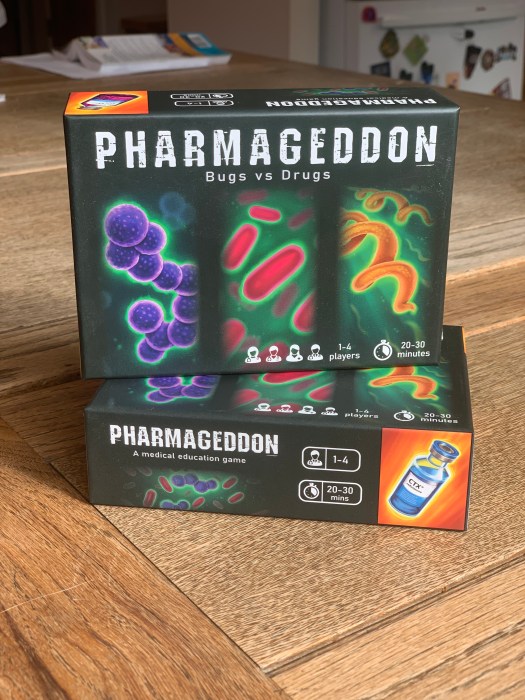
Pharmageddon is a medical educational card game providing a more enjoyable and engaging way to learn antibiotics than flash cards or charts. Learn antibiotics using an endlessly replayable game that tests your knowledge beyond trivia-style questions. Play alone or with friends, with increasing levels of difficulty as you master the game.
Game modes: solo, versus, or cooperative.
Who is This Game For?
Pharmageddon is intended for healthcare workers and learners whether they be med students, residents, and fully independent physicians or pharmacists, nurses, and PAs. Game play itself is simple, however, and requires no preexisting medical knowledge so Pharmageddon: Bugs vs Drugs can be picked up by anyone interested in learning more about medicine (though the knowledge does help).
How Is Pharmageddon Played?
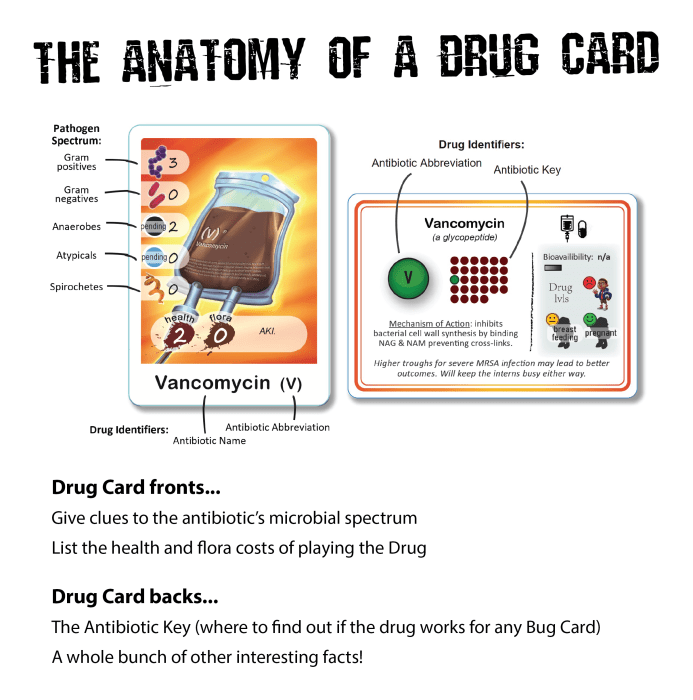
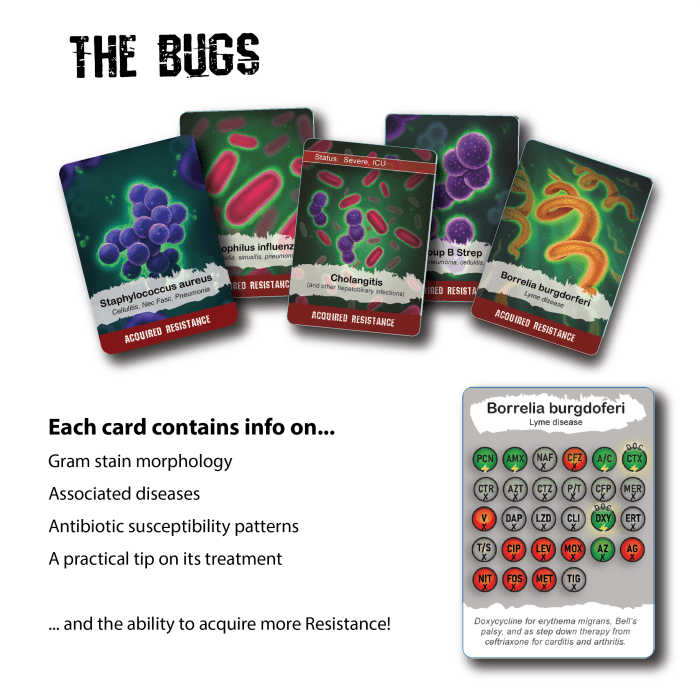
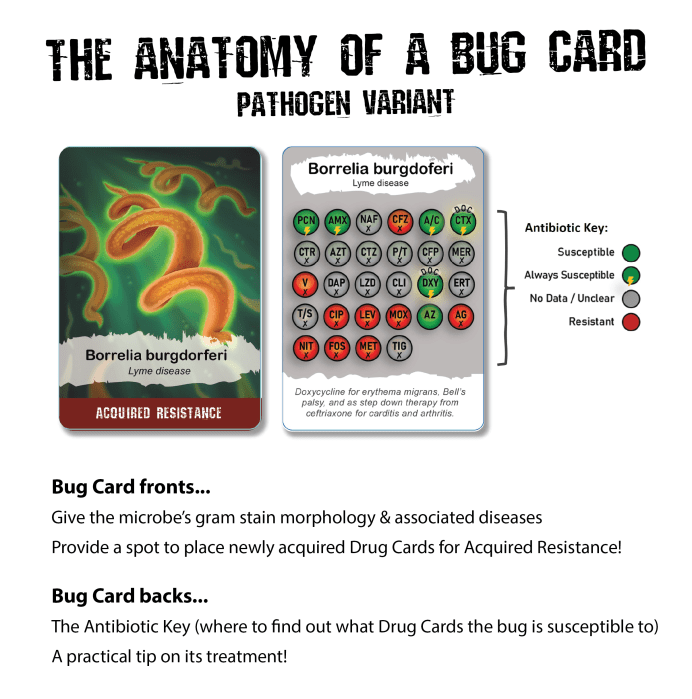
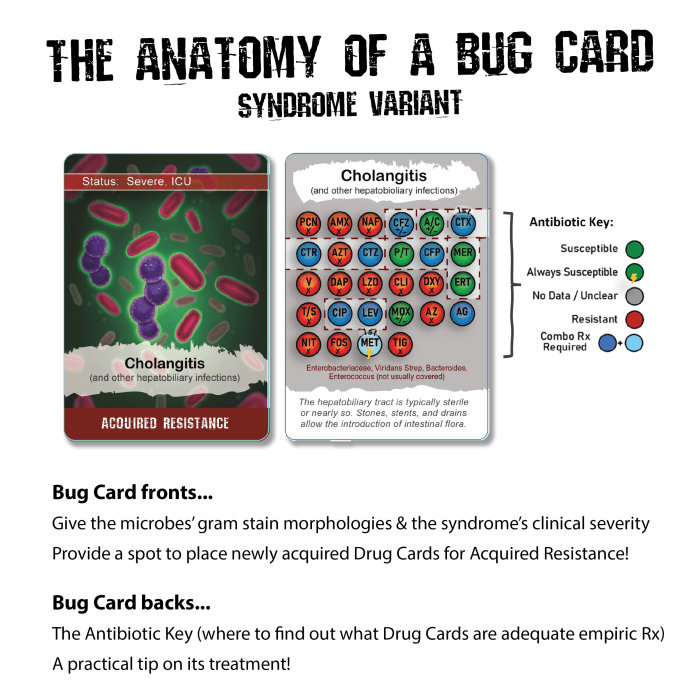
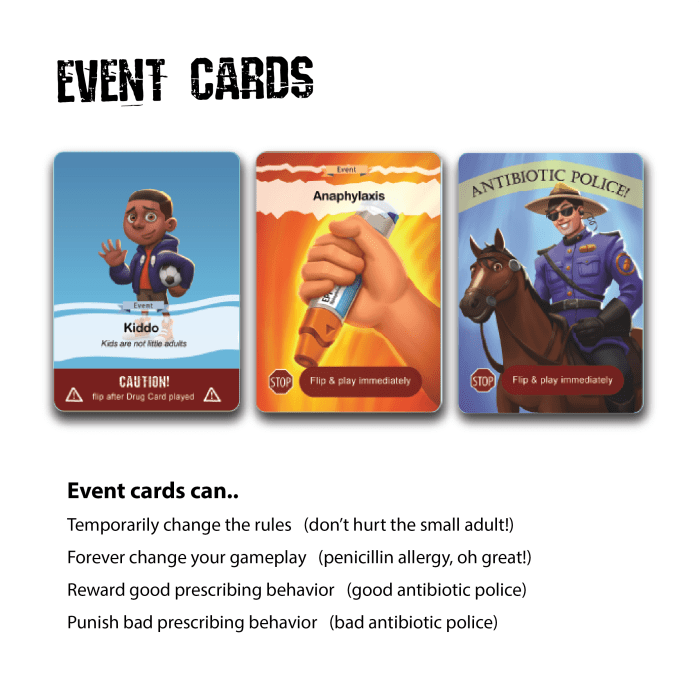
In Pharmageddon, players vie to kill the most Bugs using various Drugs. On your turn, you’ll attempt to match the right Drugs to kill the most Bugs – but beware, Drugs have side effects that can harm your Health and Flora (protective bacteria). Run out of either one and you’ll need to take a break to Recover. Not all Drugs work for every infection, and Bugs can have resistance, but if you play your cards wisely you’ll kill the most bugs with the least collateral damage and emerge victorious!
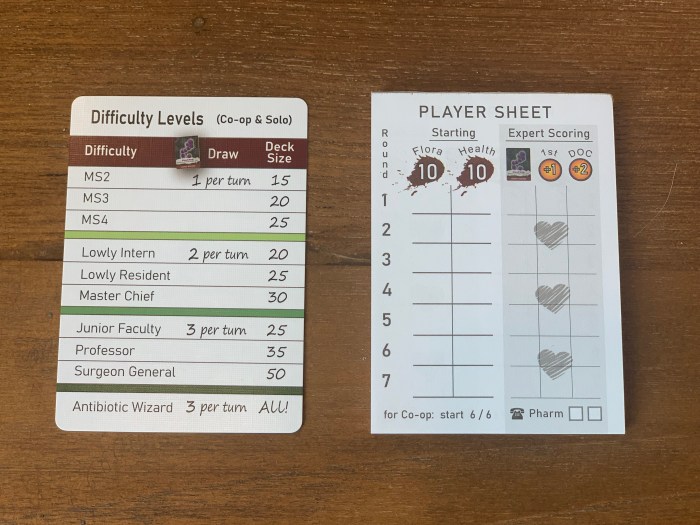
Pharmageddon can be played in 3 modes (multiplayer versus, multiplayer co-op, and solo), 3 difficulty levels, and 4 different game lengths allowing players to adjust game style and complexity to suit their interests and knowledge level.
In versus mode, you and 1-3 players take turns playing 1 or more Drug Cards to kill Bug Cards in a shared play area. Each Drug Card played, however, has a cost to Health and Flora. Guess wrong and your turn is over. Opposing players can also use their own knowledge of antibiotics to play some Drug Cards with shared drug resistance mechanisms to block your Drug Cards. After 7 rounds the player with the most Bug Cards (or highest score if using Advanced Scoring) wins!
In cooperative and solo modes, you and 0-3 players take turns playing 1 or more Drug Cards to kill Bug Cards in a shared player area similar to in versus mode. This time, however, it is you versus the deck. If the player area overflows you lose a Life and lose all 3 lives and you are out of the game!
Ages:
16+
Player Count:
1-4 players
Game Length:
20-30 minutes (adjustable)
Complexity:
Light – Medium
Target Audience:
Medical, Pharmacy, Nursing
Game Overview Video:
Nice Things People Have Said…
Pharmageddon was a fun way to reinforce my knowledge of antibiotics. It was especially useful having adverse effects of each medication be part of the game. I wish this was around during my nurse practitioner schooling!
Juan F, NP
One of the most enjoyable ways to teach learners about spectrum of activity! The beauty of it is that it puts the use of the antimicrobial into context – sure you COULD play that broad spectrum card but you could also protect your health and gut flora by pairing the best, targeted bug drug combo. The game play is fast and learners can play solo or together making this a nice option to reinforce spectrum of activity in an experiential education setting. I love that there are different difficulty levels which allow you to adjust the rules to meet the needs of the learner. The syndrome cards allow you to scaffold off the knowledge a player has gained by playing the bug-drug combos and reinforce clinical conversations about what bugs cause which syndromes. Overall fun AND educational! (Also, not going to lie, the senior pharmacists in our office play as well and I totally want to beat my colleagues!)
Niki C, Pharmacist
As an Infectious Diseases fellow, I had the opportunity to trial this game’s prototype. In summary, it’s a fantastic game that is both fun and educational. The game mechanic is intuitive to learn and therefore accessible for newcomers but also has emergent complexity; this means that more advanced and complex strategies can arise out of the game’s relatively simple mechanics, making it not only fun and easy to learn but also more rewarding and challenging to master. Another key concept of this game is its emphasis on antibiotic stewardship, or the strategic judicious or frugal use of antibiotics to effectively kill pathogens while mitigating the antibiotics’ adverse effects on the patient and risk of promoting antibiotic resistance in the pathogens. The target audience is all healthcare professionals at all levels, but most specifically, third/fourth-year medical students through residents through first-year infectious diseases fellows. Overall, 5/5 stars.
Vu N, Fellow
Pharmageddon: Bugs vs Drugs really is a unique blend of education and fun without requiring extensive medical knowledge. The deck building mechanics are intuitive so that those without a medical background can absolutely enjoy it. That combined with a brisk pace of play make for a rewarding loop that makes you want to keep playing to optimize your strategy. While I had fun with the mechanics alone, I really enjoyed the layers of education opportunities that the game provides. For students, it will help teach spectrum of activity for antimicrobials in a fun way. This really could supplement a traditional medical school pharmacology/microbiology course to allow for a “hands-on” interactive component that is often lacking in medical education for topics associated with memorization heavy topics. For residents, the game encourages more targeted therapies that avoid less side effects. Having played a prototype version, I have seen the potential of this game realized and cannot wait to get my hands on the finished product!
Derek B, Poop Scientist

